

Balancing components with game play time
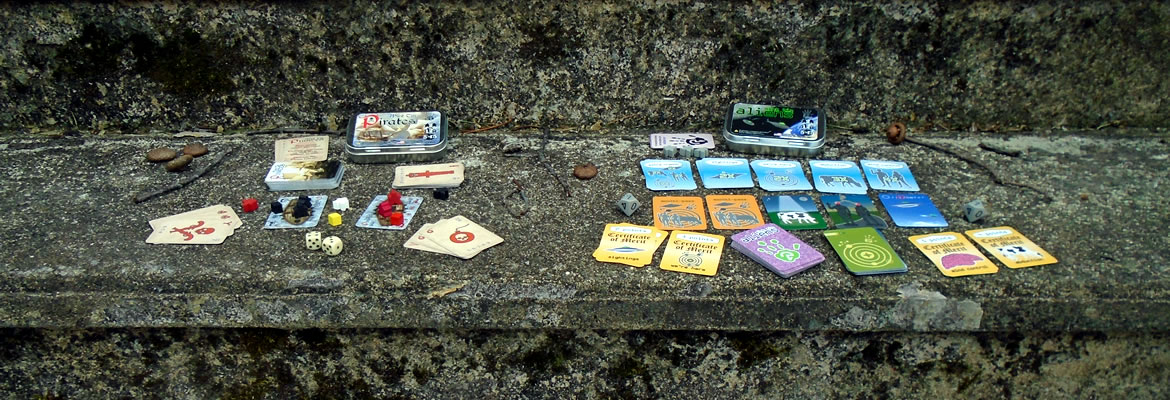
Can a light and casual game playable in 10 minutes have some “extra” components?
Our mint tin game has to be social – you have to be able to carry on a conversation in an environment that could have distractions (like family cooking at home or ordering burritos at lunch). *yum!* =p
To keep it around the 10 minute mark and easy to keep track of what’s going on, I’ve resisted having too many components (unlike my overly complex Zombalamba that will be years in the making!). =D
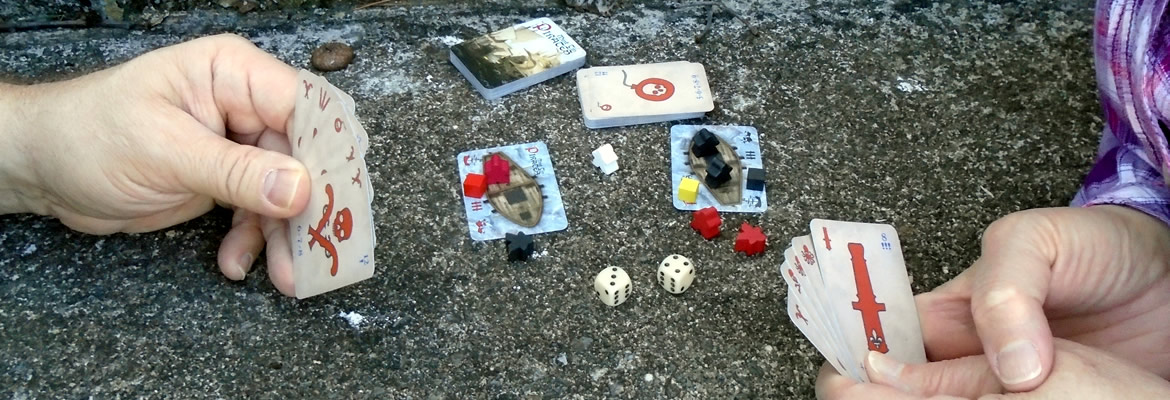
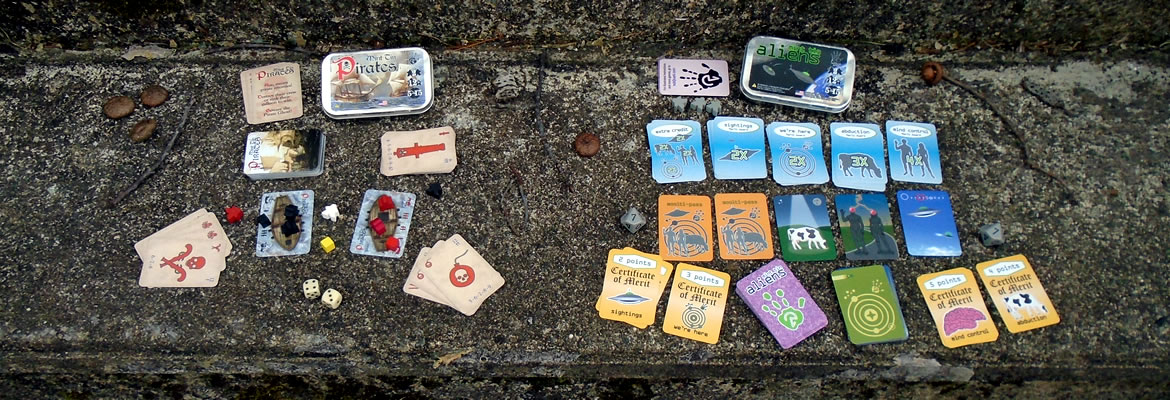
Driven by the pirate theme, I wanted a tad more complexity, something more than tokens (pirates), cards (attacks), and dice (randomness for attacks).
But not at the expense of adding time or adding something difficult to keep track of.
I added a pirate ghost to address the possibility of a “runaway leader” like a Eurogame might do. To help offset the time the ghost adds, you play with 3 cards instead of the normal 5.
A pirate ghost might be wicked cool, but probably not as robust as non-ghost pirates. =)
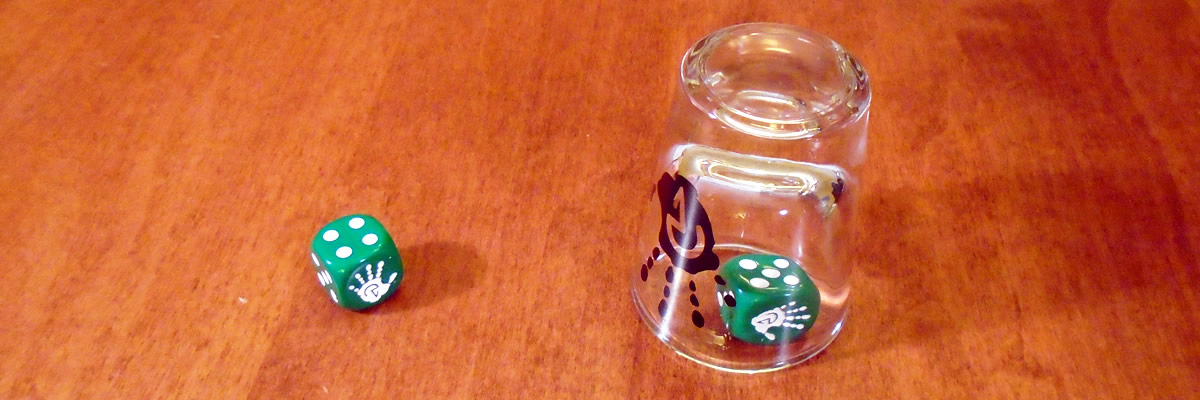
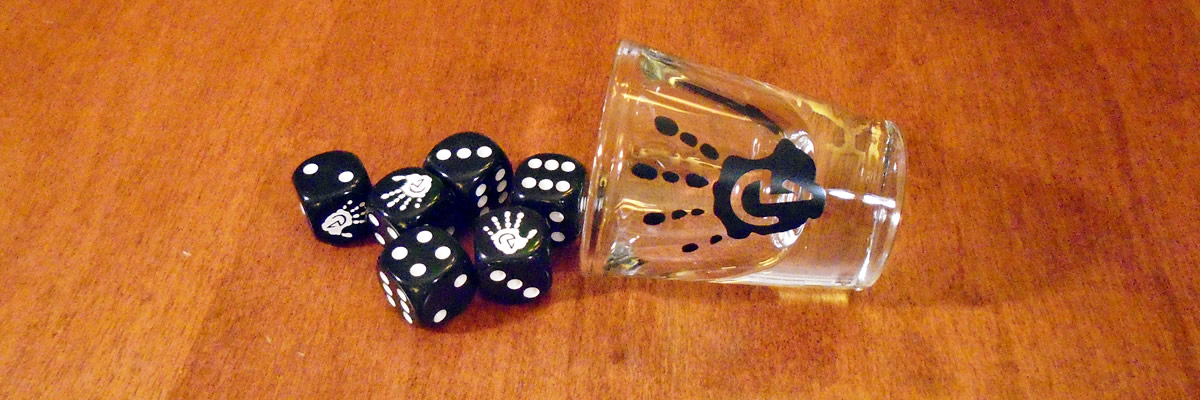
The game also needed something for rolling doubles, since those are somewhat rare, and snake eyes certainly has to be part of any pirate game using dice!
A quick shout out via Twitter to my fave game reviewer Erin from The Geeky Gimp was all it took to add gold! =)
She suggested looking at the game budget and I found MeeepleSource cubes at 6 cents each, so adding one cube is possible (darn, it’s not real gold! maybe a Kickstarter stretch goal? a centimeter cube of gold would be about $800 – hmm, from a $12 game to $1200!). o_O
A roll of doubles claims the gold and gives that player an extra card.
The extra card means more chances to attack which then speeds up the game just enough to negate the added time of the Pirate Ghost!
Funny how stuff kind of works out. Thanks Erin! =)

Help! Using spreadsheets for game design?
Mint Tin Pirates is a light casual game with the goal of being short and social. It should be easy to carry on a conversation while waiting for lunch and passing the time.
It’s been good at achieving these goals, but inner nagging says it can be a better game.
By game, I mean that there’s some science behind what we, as humans, find appealing about games – specifically about decision making.
I read a research paper (pdf) about choices written by Sheena Iyengar. When customers were presented with 24 flavours of jam, 60% would check them out but less than 2% would buy. When 6 flavours were presented, 40% stopped and 12% bought. For 100 customers, the large selection results in selling to 1.8 customers and the small selection sells to 7.2 customers.
Four times more sales with one quarter of the choices! Less is more.
Too many choices result in fewer decisions – we get overwhelmed and, rather than make a poor decision, we put it off.
That also holds true for games. Except that for casual games, it means the difference between playing a game once and playing it many times.
For Mint Tin Pirates, the first version didn’t have enough choices and the next had too many. So what’s the “right” number?
Well, that’s the million dollar question! =)
In addition to the research above, there’s also something called “The Magical Number Seven, Plus or Minus Two” (wiki) and the magical number 4.
How to go about finding that number?
Spreadsheets are not uncommon for game design and I’d like to apply that here. I’m not sure how and Googling it makes my head spin! =D
The game mechanics are simple – there are a specific number of cards that affect tokens (the meeple pirates on each player’s ship) and the success or failure of a pair of cards is determined by the roll of dice.
Most cards and rolls remove an opponent’s token. A few cards transfer a token and a few recover a lost token.
These are all definable outcomes.
I’m just not enough of a spreadsheet whiz to wrap my head around it. If you have suggestions, please let me know here or via Twitter.
Thanks! =)
