

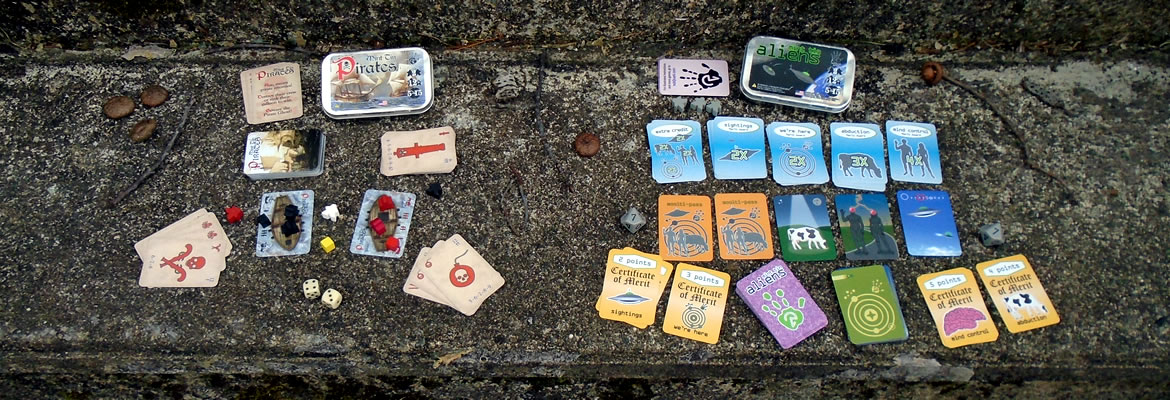
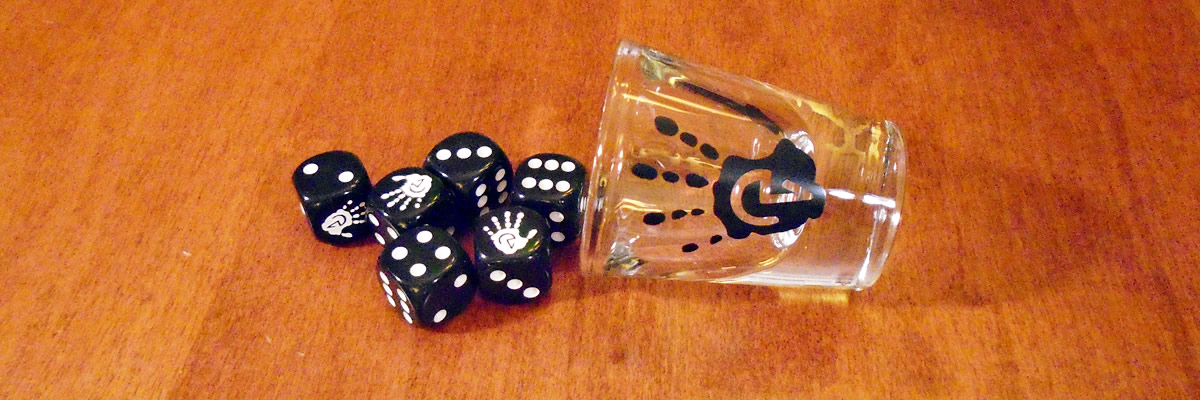
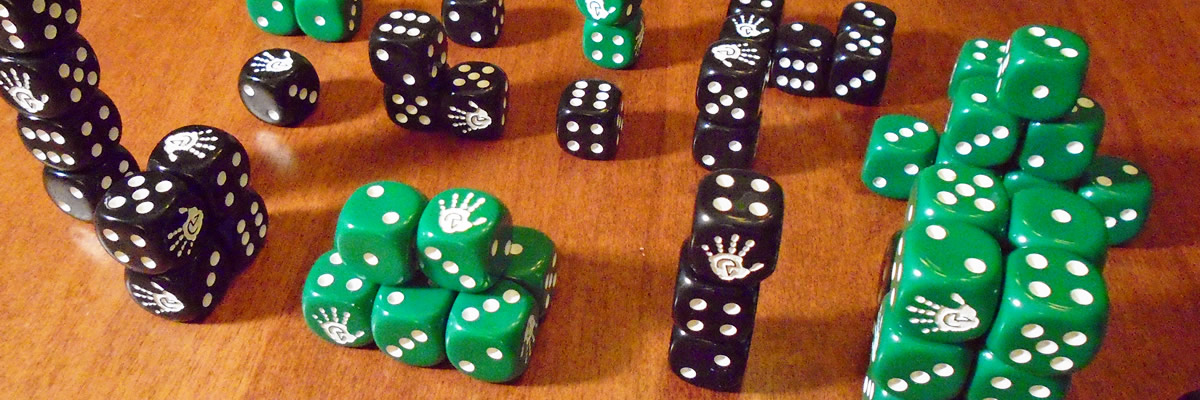
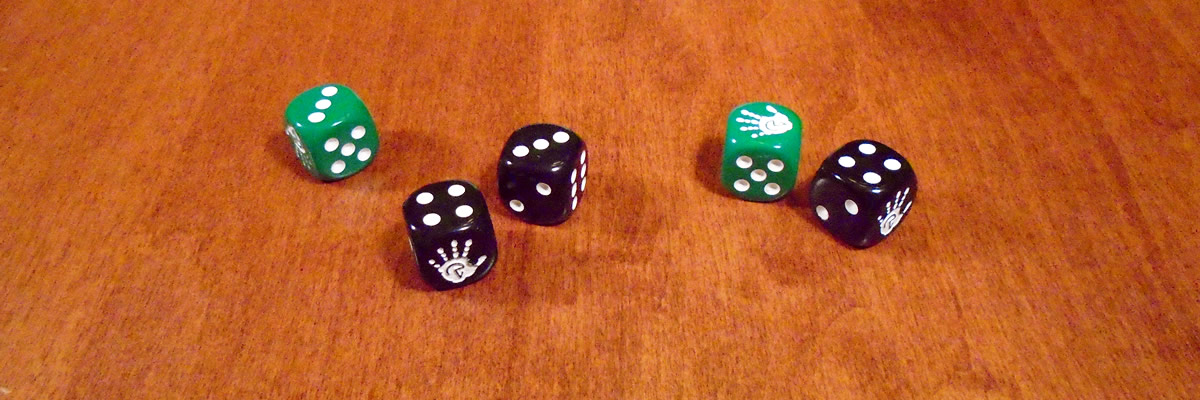
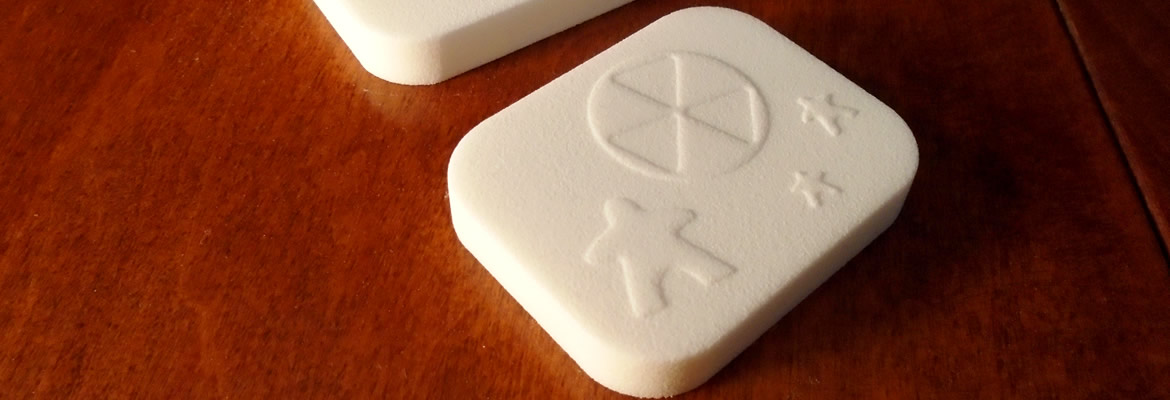
Zombalamba game counters – another option
Zombalamba is in very early stages of development and it’s striving to be a Euro style game. As such, it has “halma” pawns for zombies and roly pawns for players.
The game has the concept of resources which are used to carry out running (player pawn movement) and attacks (zombie pawn capture). The number of resources that can be carried are limited to mimic real-world conditions of being on foot with a small backpack.
It was natural to think in terms of chipboard counters like many games use. They are economical to print and you can create whatever graphics seem best suited. In Zombalamba, these resources went through a few iterations and ended up being water, food, and medical supplies. A fourth resource indicated by a thumbs up graphic were luxury items like binoculars and flashlights, but these were dropped in favour of placing those items into an “event” card deck as a way to help players with low resources level up. This simplifies the play and acts as a balancing tool (a card with binoculars might be worth two of any resource, for example).
The challenge with the counters arose with the printing quality. I want this game to be 100% made in the USA and to be a home assembled game. People outside the self-published game industry react strongly to this with comments like
but what if you sell 10,000 in a year?
If that becomes the case (cue a daydreaming sequence), then that’s an excellent challenge to face! =)
One mainstream game printer only does card stock for counters which I find too thin to handle easily and the other custom game printer has far too much drift in their cutting and the paper on the edges wears away easily.
I looked at custom plastic chips but they are too expensive and then I looked at some other games and came up with a solution keeping in the Euro style and keeping with my desire to be text free in my pieces.
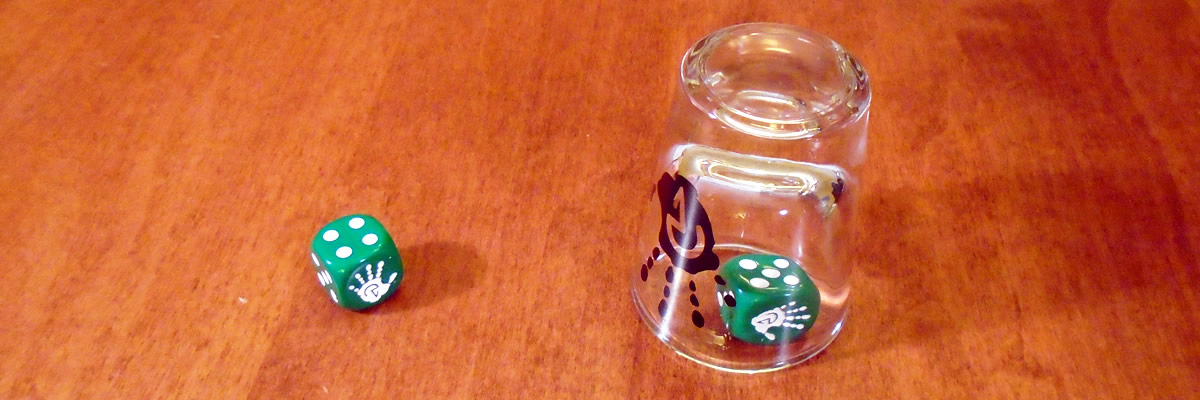
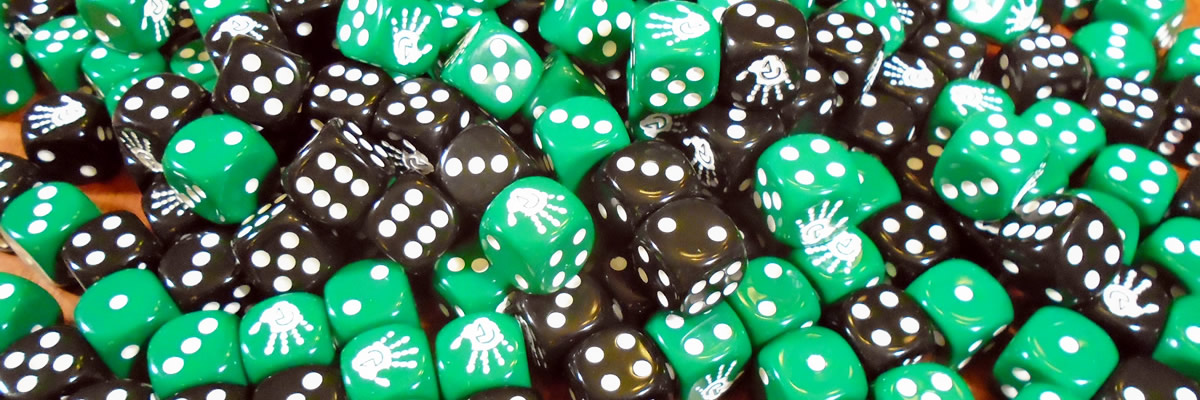
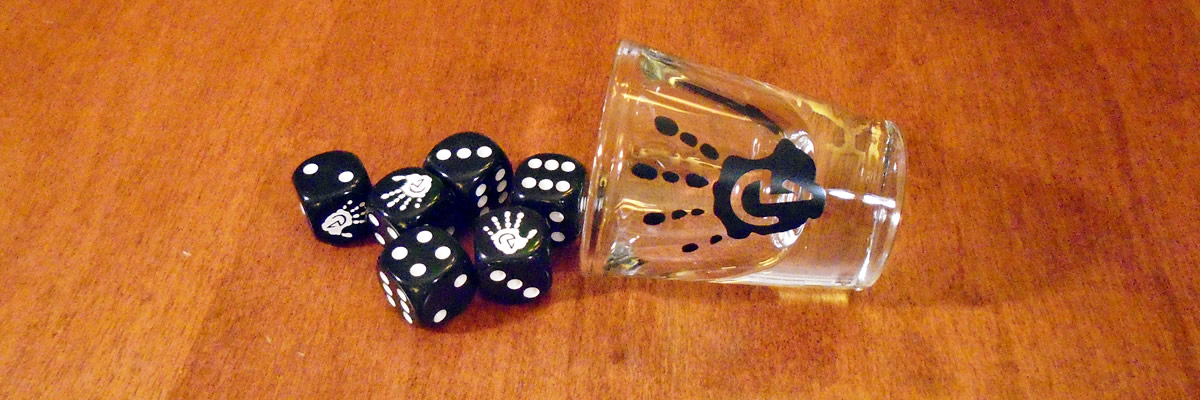
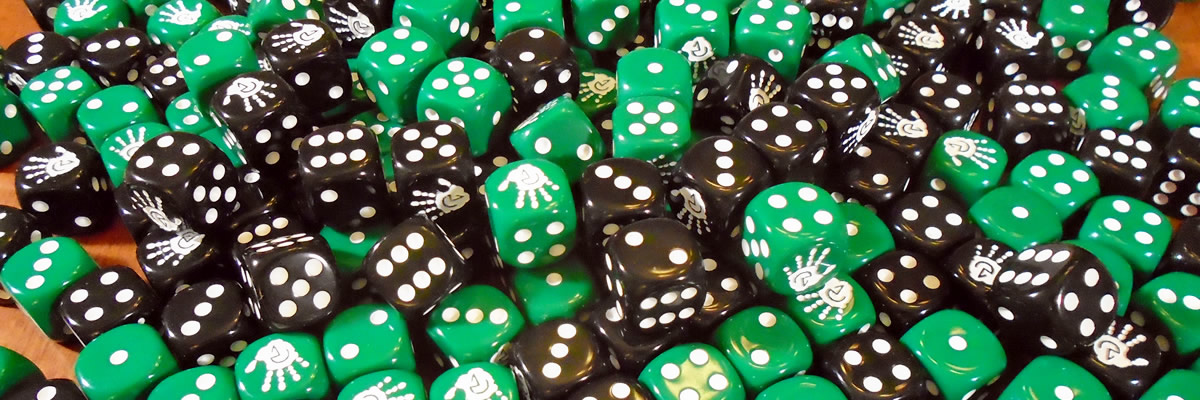
Dice! Humble dice!
They’re easy to handle and people understand what they are. A six sided dice (d6) has a built in limit of 6 as the max of a resource and this means fewer pieces for faster game setup!
Rather than having 108+ chipboard counters and a bank for them with subsequent passing back and forth, now I only need 18 dice (three per each of six players). The player turns the dice to increment their resources. This isn’t a new concept in games, but it was new to me and a seemingly good solution.
And to top it off, the dice come out to be less expensive at 16 cents each and lend a higher quality feel to the game. Time and lots of play testing will see how this pans out . . .

Convert a Raster Image to Vector with Adobe Creative Suite
I’ve used Flash since 1999 and thought it would be around forever. The power of ActionScript made so many things possible with Flash from making SCORM compliant quizzes to very intricate software simulations to dynamic apps. Oh well . . .
One neat thing that many people have used Flash for was to take raster images and convert them into vector by importing the image into Flash and then tracing the bitmap. The result is a vector graphic that you can mess with in Flash.
However, I’ve never exported the vector image out from Flash for use in Illustrator. I never had the need to do that until yesterday nor did I know it was possible.
Indeed, it is possible with CS5 or above!
Import your raster image into Flash, trace the bitmap (there are several settings that affect the precision and time it takes to do the tracing), and then export that image to the FXG format. The FXG format is an Adobe XML format that can be opened in Illustrator.
So what was the need for this? A custom dice for our fledgling game.
Years ago I had drawn a hand print for use as part of a graphic and it was a small raster image done at 72 dpi for internet use. I needed a much larger 300 dpi image and ended up making one that’s 7.5 inches square – about 30 times larger than the original raster!
I sent over the Illustrator vector file and shortly after had the excellent proof below.

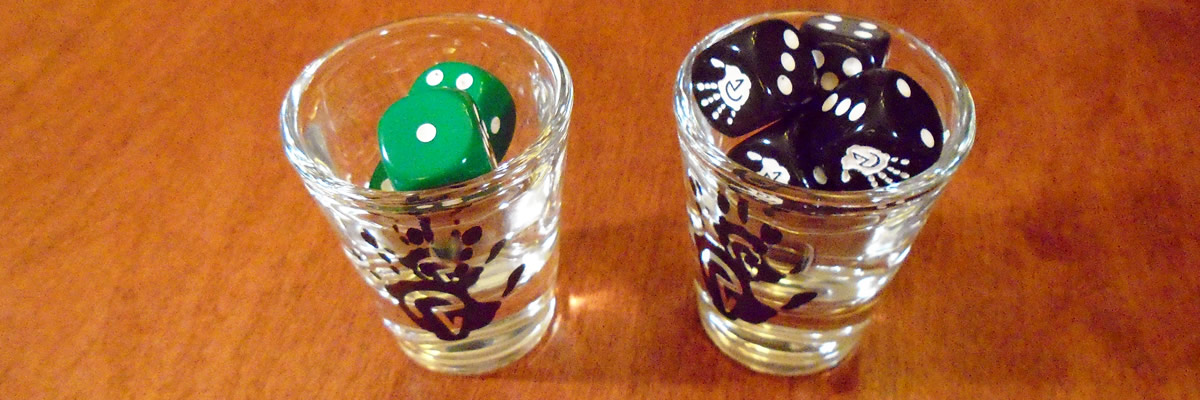
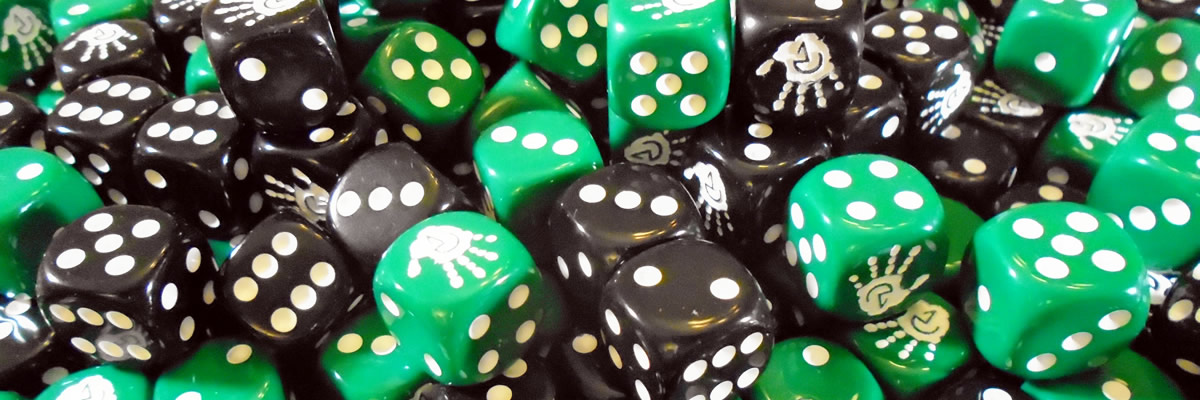
Here are the specifics on the dice – this is from Chessex Dice who are considered the gold standard for gaming dice (both casino and home gaming). The art department is very nice to work with and the cost for one custom side (the “ones” side) comes out to 75 cents per dice for a quantity of three dozen and they can do as few as 10.
Chessex has many colours available and can do very fine detail on as many sides as needed and also on varying sided dice (dodecahedrons, etc).