


It’s in the bag – well, some of it
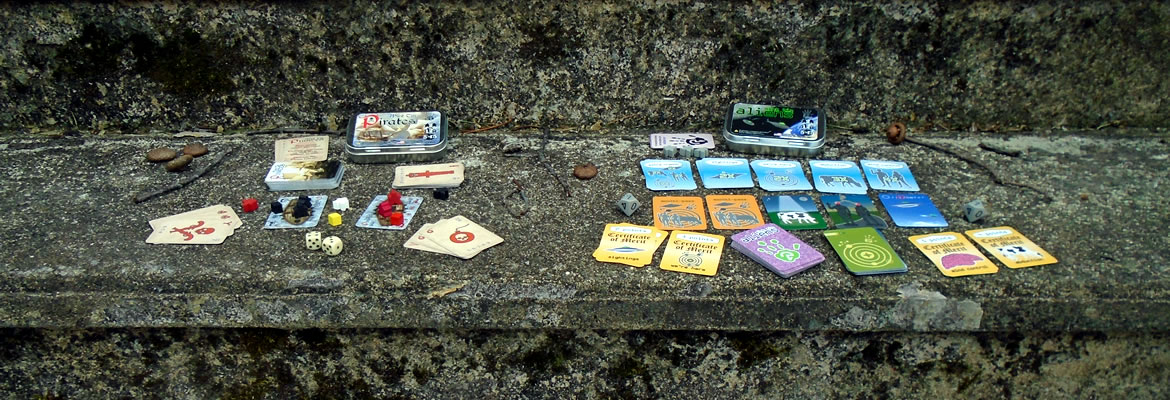
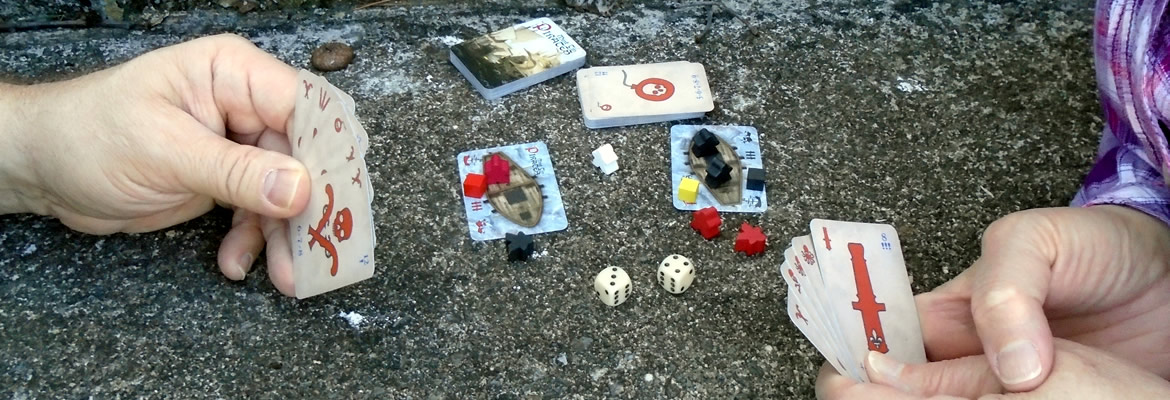
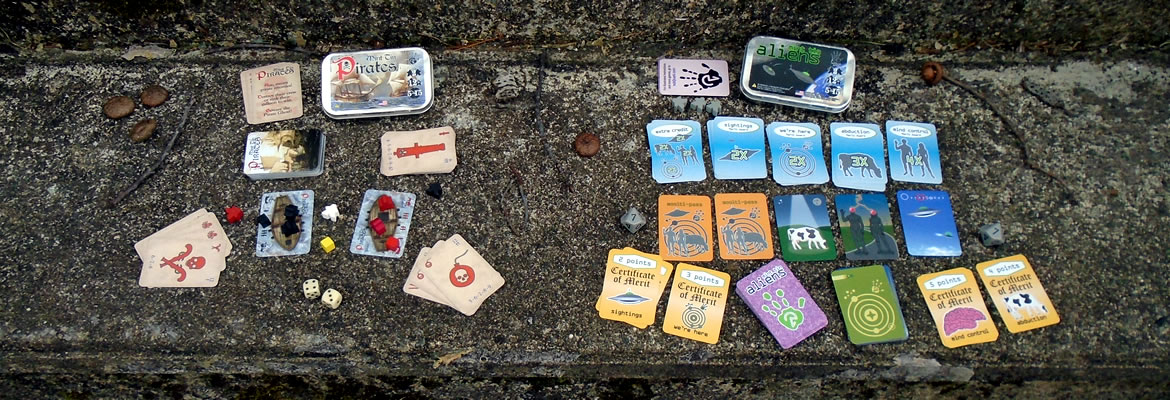
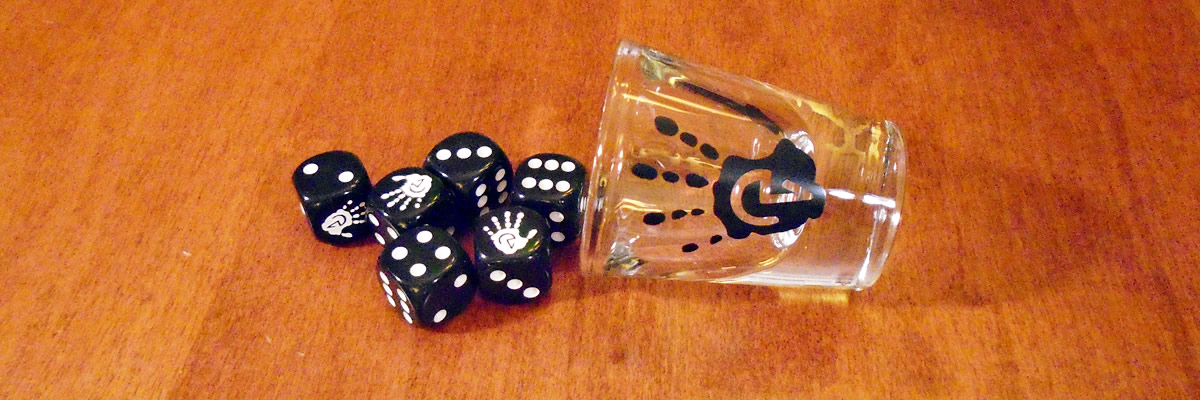
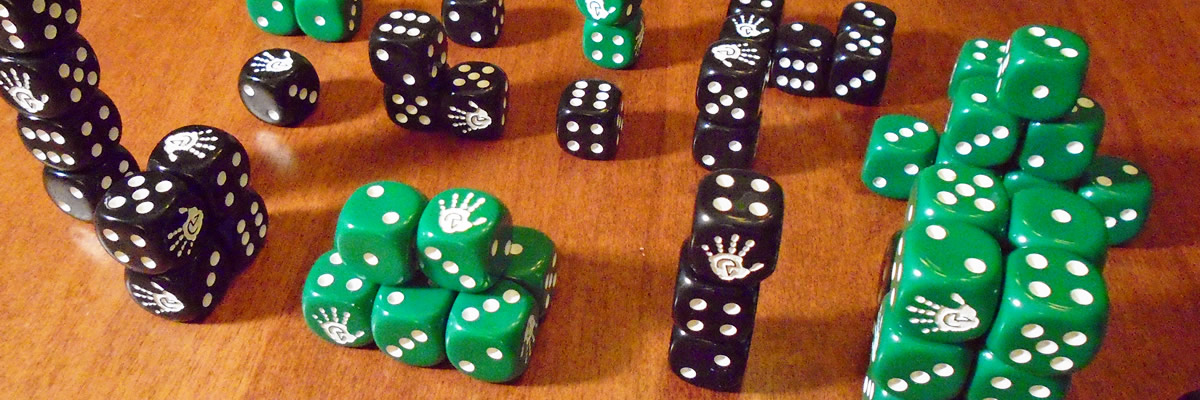
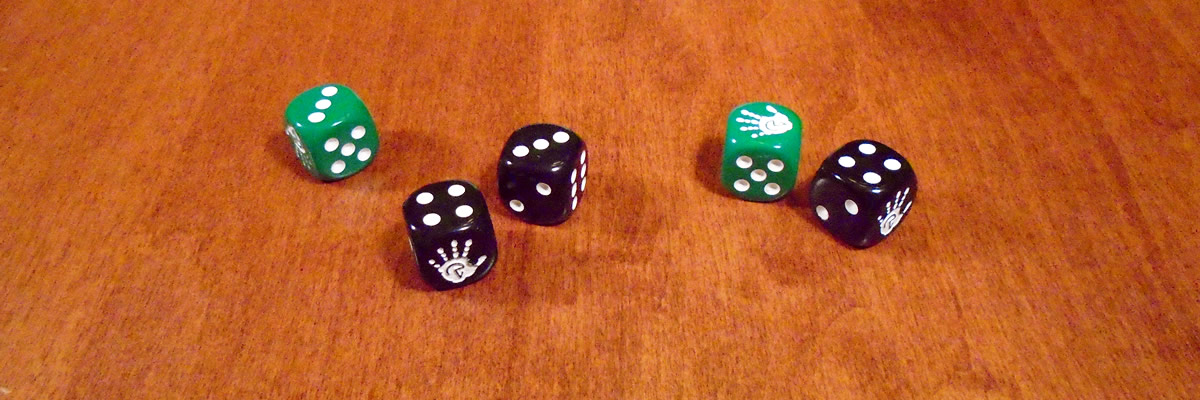
While waiting on real cards for Mint Tin Pirates and Mint Tin Aliens, I bagged the components for play test copies and reviewer copies of the games. The reviewer copies won’t use this first set of cards but should be ready to go within two weeks. This allows for color correction on the artwork since there shouldn’t be anything drastic from the final play testing (should being the operative word!). =)
Printing is a different beast from online graphics. Color saturation varies from printer to printer and also on paper being used. There are all kinds of obscure tips to keep in mind such as not letting any colors drop below 5% in gradients or else tiny ink dots become visible. Additionally, Printer Studio doesn’t accept press quality PDFs, which is pretty much the industry standard, but they do accept TIFFs which technically allow for higher quality and used to be the print standard.
Complete file size was about 325 MB for both decks and took about 10 minutes to upload to Printer Studio. I’ve read that some designers don’t like the upload and layout tool that Printer Studio uses, but I found it easy and logical to use. I don’t know how you could improve upon it – lots of places to double check your work and plenty of opportunity to tweak before submitting for printing.
Back to bagging!
This was a good test of the time involved and of how realistic it is for this Maker Movement approach (fancy way of saying homemade). The good news is that it won’t be overwhelming to make several hundred copies of the game if the Kickstarter goes well. =)
Pirates is slower to bag than Aliens and that makes sense because of the components:
| Mint Tin Pirates | Mint Tin Aliens |
| 2 6-sided 12 mm dice | 2 10-sided dice |
| 3 red mini meeples | 3 gray mini meeples |
| 3 black mini meeples | |
| 1 white mini meeple (pirate ghost!) | |
| 1 red cube | |
| 1 black cube | |
| 1 yellow cube |


Game Rule Editing
Six weeks ago I rambled on about the value of an editor for books and games and wanted to share my first editor experience for game rules.
I have a wonderful editor who I know through my day job creating eLearning. She’s been editing the ChuChu Chicken & Pedro the Goat kid’s books since the beginning of the year and it made sense to call upon her for game rules, even though that’s very different from kid’s books. In her work at my day job, she edits software training material; step-wise procedures are something she’s comfortable with.
After several rounds of wordsmithing with family, friends, and my local game design meetup group, I was feeling good on the instructions for Mint Tin Pirates and Mint Tin Aliens. The instructions have to fit on the fronts and backs of 3 mini poker cards, so space is at a premium.
 I emailed the Word files to the editor and a photo of the each game setup. Being able to understand how to play without my explanation and without the actual games is something that instructions should be able to do.
A few days later, she returned her edits.
The results are clearer instructions, more concise text through better phrasing and word use, and a better “flow”. The cost for this was about $20 (her hourly rate is $35). $10 per game seems like a bargain to me and I feel more confident about players understanding the rules of play.
Game rules shouldn’t get in the way of playing and should form an initial positive impression of a game.
If you don’t have an editor (and why would you?), give a shout out on Twitter or to a LinkedIn game design group. There are many good editors online and it’s worth the trouble to find one. If that seems daunting, and it can be, The Game Crafter also has an excellent instruction service called Sanity Tests.
Play well! =)